Flexible printed circuit board materials
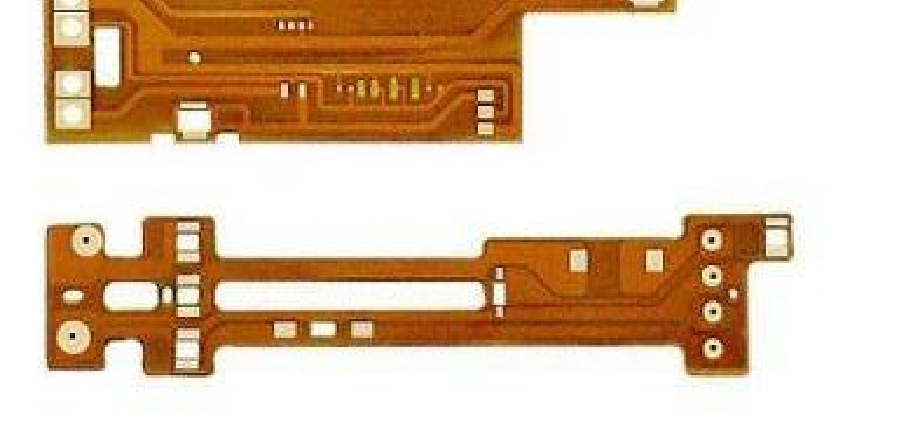
Driven by the urgent demand for form adaptability in wearable devices, foldable screen terminals, and flexible sensors, Flexible Printed Circuit (FPC) materials have become the core carrier connecting electronic components and deformable structures thanks to their excellent mechanical flexibility and electrical performance. Unlike traditional rigid PCBs using epoxy resin fiberglass (FR-4) substrates, FPC materials use polymer films such as polyimide (PI) and polyester (PET) as base materials, combined with ultra-thin copper foils and flexible cover layers, achieving millimeter-level bending radius, million-level bending life, and lightweight characteristics, providing key support for the form innovation of electronic devices. Based on industrial measurement data and technological breakthroughs, this article analyzes the core advantages, application value and existing challenges of FPC materials.
Core Technical Advantages: Breaking Through Performance Limits of Rigid Substrates
1. Excellent Mechanical Flexibility and Durability
Bending and folding performance:
PI‑based FPC materials can achieve a minimum bending radius of 0.1 mm (thickness 25 μm). After 1 million repeated bending cycles (radius 1 mm), the conductor resistance change rate is < 5%. The PI‑based FPC used in Huawei Mate X5 foldable phone supports over 200,000 times of 180° folding life, far exceeding traditional FR‑4 materials (fracture after <100 bends).
Lightweight and space efficiency:
The area density of FPC is only 30–50 g/m², 1/5 that of FR‑4 PCB of the same size. In smart watches, FPC reduces internal space occupation by 40%, providing margin for battery expansion. For example, the FPC layout of Apple Watch Ultra 2 extends battery life to 36 hours.
2. Stable Electrical Performance and Environmental Adaptability
High‑frequency signal transmission capability:
Modified PI substrates have a dielectric constant (Dk) of 3.0–3.5 @ 10 GHz and dielectric loss (Df) <0.002, supporting 5G mmWave signal transmission loss <0.2 dB/cm. In the mmWave radar module of Samsung Galaxy S24 Ultra, FPC achieves stable 28 GHz signal transmission, ensuring ranging accuracy of ±1 mm.
Wide operating temperature range:
PI‑based FPC maintains stable performance in the range of **‑55℃ to 150℃**, with copper foil peel strength >0.8 N/mm (after aging at 125℃). The automotive FPC wiring harness of Tesla Model 3 reliably transmits control signals at 120℃ high temperature in the engine compartment, with a failure rate < 0.01%/year.
Key Technological Breakthroughs: Collaborative Innovation of Materials and Processes
1. Development of New Substrates and Conductor Materials
Ultra‑thin polyimide (PI) film:
DuPont’s Kapton® FN series ultra‑thin PI film has a thickness of only 12.5 μm and tensile strength of 200 MPa, 40% lighter than traditional PI film (25 μm), while maintaining 90% bending resistance. It has been used in the flexible touch circuit of Xiaomi Band 8.
Nanocomposite conductors:
3M’s copper‑graphene composite coated FPC improves conductor corrosion resistance by 3 times. After 1000 hours at 85℃/85% RH, the resistance increase is <10%, solving the oxidation problem of traditional copper foil, suitable for medical devices in humid environments.
2. Manufacturing Process and Structure Optimization
Fine circuit manufacturing technology:
Sumitomo Wiring Systems’ Laser Direct Imaging (LDI) process achieves fine circuits of 10 μm/10 μm line/space on 50 μm thick PI substrate, 3 times higher density than traditional photolithography (minimum 30 μm), reducing the volume of VR headset FPC interface module by 50%.
Dynamic stress buffer structure:
TTM’s “meander” wiring FPC design disperses bending stress through wavy conductor paths, extending conductor fatigue life at folding areas by 5 times, achieving long‑term reliability of 180° folding in Motorola Razr foldable phones.
Diversified Application Scenarios: From Consumer Electronics to Industrial and Medical
1. Consumer Electronics and Wearable Devices
Foldable screen terminals:
The FPC material provided by BOE for OPPO Find N3 adopts 3‑layer PI substrate and ultra‑thin copper foil (9 μm), achieving a bending radius of 0.3 mm at the screen hinge. With stress dispersion design, the folding thickness is controlled within 10 mm, while supporting stable 4K video signal transmission.
Smart wearable sensors:
The FPC electrode of Amazfit smart watch fits the wrist skin through 0.1 mm ultra‑thin PI substrate, improving bioelectric signal acquisition SNR by 25 dB, heart rate monitoring error < 2 bpm, and accuracy of 98% in sports scenarios.
2. Automotive and Industrial Electronics
Automotive flexible circuits:
Bosch’s automotive radar FPC module uses 150℃ heat‑resistant PI substrate, realizing 3D curved installation in the car bumper, reducing radar signal transmission loss by 30%, increasing detection range to 250 meters, supporting AEB system 0.5‑second early warning.
Industrial robots:
The joint FPC of Fanuc collaborative robots uses oil‑resistant PI material and gold‑plated conductors, maintaining stable signal transmission during ±180° rotation, with a life of 500,000 rotations, reducing maintenance by 90% compared with traditional cable solutions.
3. Medical and Bioelectronics
Flexible medical electrodes:
Medtronic’s heart monitoring FPC electrode is only 50 μm thick, fitting the chest curve, reducing ECG signal acquisition noise by 40%, realizing 24‑hour dynamic heart rate monitoring with data accuracy of 99.1%.
Implantable electronic devices:
Abbott’s FPC lead for neurostimulators uses biocompatible PI material and platinum‑iridium alloy conductor, with a diameter of 0.3 mm, implantable into brain tissue to transmit electrical signals. Conductor impedance change < 10% after long‑term implantation (10 years).
Existing Challenges and Solutions
1. Cost and Large‑Scale Production Bottlenecks
Challenge: PI‑based FPC materials cost 5–8 times that of FR‑4, and the manufacturing yield of fine circuits (<20 μm) is only 75%, limiting applications in mid‑to‑high‑end devices.
Solutions:
Adopt PET/PI composite substrates to reduce material cost by 30% in non‑high‑temperature scenarios; large‑scale application has been realized in smart card FPC;
Promote roll‑to‑roll (R2R) production process, increasing yield of 10 μm line width circuits to 90%, verified by Fujikura’s mass production lines.
2. High Temperature and Reliability Limitations
Challenge: PET‑based FPC shows dimensional shrinkage (>0.5%) above 80℃, affecting precision circuit connection; conductor fatigue after long‑term bending may cause open circuits.
Solutions:
Develop high‑temperature resistant PET (Tg=180℃), improving dimensional stability to within 0.1% in automotive cockpit environments;
Adopt “Cu‑Ni‑Au” triple plating, extending conductor fatigue life to 2 million bending cycles, the standard process for aerospace‑grade FPC.
3. Design and Testing Complexity
Challenge: Mechanical simulation and electrical performance coupling analysis of flexible structures are difficult; traditional PCB design tools cannot accurately predict signal integrity after bending.
Solutions:
Siemens EDA launched FPC‑dedicated simulation tools, simultaneously simulating stress distribution and impedance change during bending, improving design verification efficiency by 50%;
Develop dynamic testing equipment to simulate on‑resistance change after 100,000 bends, ensuring mass production consistency; Tektronix FPC reliability test system has been adopted by Foxconn.
The development of FPC materials has driven electronic devices from “rigid and square” to “form‑adaptive”. Their advantages in lightweight, space utilization and reliability have become core supports for innovative products such as wearables, foldable terminals and flexible robots. Despite remaining challenges in cost, high‑temperature performance and design complexity, with material modification, process optimization and design tool maturity, FPC materials are evolving toward thinner (<10 μm), more weather‑resistant (‑65℃ to 200℃) and lower‑cost directions, opening broader space for form innovation and functional integration of electronic devices.


