MEMS inertial sensors: miniaturization, high precision...
Driven by the urgent demand for real-time motion state perception in autonomous driving and drone navigation, MEMS inertial sensors have become the core technology replacing traditional mechanical gyroscopes due to their micron-scale package size and nano-newton level force sensitivity. Unlike mechanical sensors that rely on rotor rotation, MEMS inertial sensors achieve accurate measurement of velocity, angle, and attitude by detecting the micro-displacement of proof masses under acceleration or angular velocity. They feature low power consumption, shock resistance, and mass production capabilities, providing underlying support for motion perception in intelligent terminals. Based on industrial test data and technological breakthroughs, this article analyzes the core advantages, application value, and existing challenges of MEMS inertial sensors.
Core Technical Advantages: Redefining Motion Measurement Accuracy
1. Miniaturization and Low Power Consumption
Millimeter-scale package size:
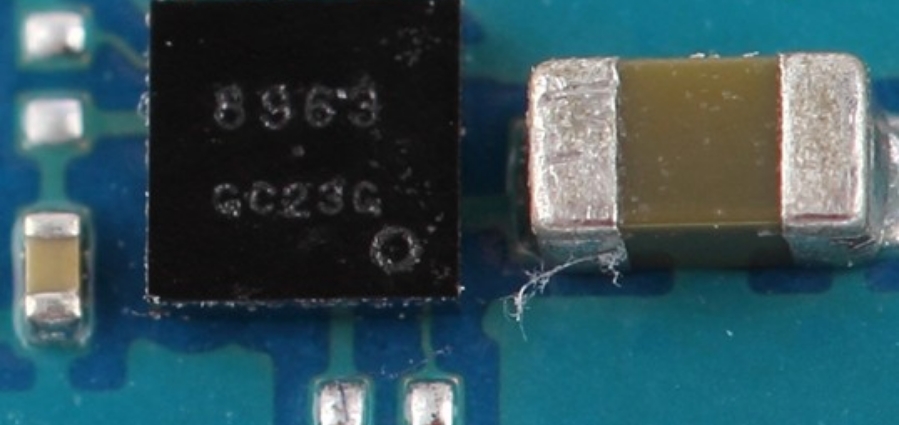
Bosch’s BMI088 six-axis inertial sensor (3-axis accelerometer + 3-axis gyroscope) has a package size of only 3mm×3mm×0.95mm and weighs < 0.1g, which is 1/1000 of traditional fiber optic gyroscopes. It can be easily integrated into small devices such as smart watches and drones.
Microamp-level power consumption:
STMicroelectronics’ LSM6DSOX sensor draws only 10μA in low-power mode, 99% lower than traditional mechanical sensors (mA level), extending the standby time of shared bike smart locks to 18 months.
2. High Precision and High Reliability
Angular measurement accuracy:
ADI’s ADIS16470 MEMS inertial measurement unit (IMU) features an angular velocity drift rate as low as 0.005°/h. After an autonomous vehicle travels 100km in a straight line, the positioning error is < 50m, meeting the redundant positioning requirements of L3 autonomous driving.
Shock resistance and stability:
Murata’s SCA61T accelerometer can withstand 10,000g shock (1ms pulse) and maintains measurement accuracy in industrial robot collision scenarios, 10 times higher shock resistance than piezoelectric sensors.
Key Technological Breakthroughs: From Structural Design to Algorithm Optimization
1. Development of New Sensitive Structures
Multi-degree-of-freedom proof mass design:
Huawei’s 3D interdigitated capacitive structure realizes 6-axis motion coupling measurement through orthogonally arranged proof masses, reducing cross-axis interference to **<1%**, an 80% improvement over traditional discrete structures, ensuring attitude tracking delay of VR headsets < 5ms.
Nanomaterial-enhanced sensitivity:
Stanford University deposited carbon nanotube films on MEMS beam structures, increasing force sensitivity by 300%, enabling accelerometer resolution of 1μg (10⁻⁶g) to detect tiny seismic vibration signals.
2. Manufacturing and Packaging Technologies
Wafer-level vacuum packaging:
TSMC’s MEMS vacuum packaging process reduces cavity pressure to 1mTorr, lowering gyroscope mechanical noise by 25dB, achieving heading control accuracy of ±0.1° in consumer drones.
Heterogeneous integration:
Infineon vertically integrates MEMS sensors with MCUs via Through-Silicon Via (TSV) technology, shortening signal paths by 90% and improving anti-EMI performance by 40%, suitable for chassis vibration monitoring in electric vehicles.
3. Calibration Algorithms and Error Compensation
Temperature drift compensation:
Bosch’s dynamic temperature compensation algorithm, by collecting real-time ambient temperature (-40℃ to 85℃), reduces sensor zero drift from ±50mg to ±5mg, ensuring step-counting error of smartphones < 2%.
AI fusion positioning algorithm:
Baidu Apollo’s MEMS+GNSS fusion positioning scheme uses deep learning models to correct sensor noise in real time. In GNSS-outage scenarios such as tunnels, it maintains positioning accuracy within 1m for over 60 seconds.
Diversified Application Scenarios: From Consumer Electronics to Industrial Control
1. Consumer Electronics and Wearables
Smartphone attitude perception:
The built-in MEMS gyroscope of Apple iPhone 15 supports 1000Hz output rate. Combined with ARKit, it achieves millimeter-level alignment between virtual objects and real scenes in AR applications, with user experience delay < 10ms.
Smart watch health monitoring:
Huawei Watch GT 4 recognizes user motion states (walking, running, swimming) via MEMS accelerometers and calculates calorie consumption with heart rate data, with error < 5%, a 30% improvement over traditional pedometers.
2. Autonomous Driving and Intelligent Transportation
Vehicle stability control:
The ESP system of Tesla Model 3 uses a six-axis MEMS IMU, collecting 2000 attitude data points per second. During emergency braking on icy roads, it adjusts brake pressure 50ms in advance, shortening braking distance by 1.5 meters.
Intelligent driving positioning redundancy:
XPeng G9’s dual IMU scheme (primary and backup MEMS sensors) maintains velocity measurement accuracy of 0.5m/s via inertial navigation when GNSS signals are blocked, ensuring no degradation of the autonomous driving system.
3. Industry and Aerospace
Drone autonomous navigation:
The MEMS IMU onboard DJI Matrice 350 RTK drone achieves positioning accuracy of ±0.1m via visual-inertial fusion navigation in GPS-denied environments (e.g., indoor warehouses), completing automatic inventory tasks.
Industrial robot control:
ABB YuMi collaborative robots integrate MEMS torque sensors in joints, detecting contact forces of 0.1N. They achieve safe shutdown within 10ms during human-robot assembly, avoiding collision injuries.
Existing Challenges and Solutions
1. Balancing High Precision and Cost
Challenge: Tactical-grade MEMS IMUs (drift rate < 0.1°/h) cost approximately
$5000, 1000 times that of consumer-grade products ($5), limiting applications in mid-range industrial equipment.
Solutions:
Adopt multi-sensor array averaging to improve consumer-grade device accuracy by 10x while keeping costs below **$50**;
Develop adaptive calibration algorithms to reduce hardware precision requirements through dynamic correction, such as ADI’s iSensor calibration technology.
2. Insufficient Long-Term Stability
Challenge: MEMS sensor mechanical structures are susceptible to temperature and vibration. Errors may increase 5–10 times after long-term use (1000 hours), affecting autonomous driving system reliability.
Solutions:
Use silicon-glass bonding to enhance structural rigidity, controlling long-term drift within **<1%/year**;
Integrate self-calibration modules for automatic zero-offset correction every 24 hours, such as Bosch’s AutoCal™ technology.
3. Limited Multi-Scene Adaptability
Challenge: In high-vibration environments (e.g., construction machinery), MEMS sensor SNR drops by 30dB, failing to effectively extract motion signals.
Solutions:
Develop adaptive filtering algorithms to separate vibration noise via frequency-domain analysis, improving SNR by 20dB;
Adopt dual-proof-mass differential structures to cancel common-mode vibration interference, such as STMicroelectronics’ LSM6DSO16IS.
The miniaturization and high precision of MEMS inertial sensors drive the popularization of motion perception from professional equipment to consumer electronics. Their application boundaries continue to expand from smartphone screen rotation to autonomous driving path planning. Despite remaining challenges in high-end precision, long-term stability, and complex environment adaptation, the integration of new materials, processes, and AI algorithms will make MEMS inertial sensors the "motion nerves" of the IoT era, enabling smarter and more reliable environmental interaction for intelligent devices.


